

Aligning AI to Animal Welfare
June 23, 2026
December 31, 2025
Last year, we promised that we would work harder for animals—and I think we delivered. In fact, I will never forget 2025. It ends a chapter for me.
In 2011, I stood on a street in Kraków holding a banner depicting the killing and skinning of fur animals. That was my start in this movement. Many of us at Anima International began the same way—witnessing cruelty we couldn’t ignore and refusing to look away.
In 2025, Poland banned fur farming. We made that happen.
Fourteen years between that street corner and a presidential signature. It’s a satisfying feeling to close a program because you achieved your goal. The whole idea of starting a charity like ours is to make yourself obsolete.
But I won’t let this personal attachment distort my perspective on why I’m here. Whether we’re celebrating historic wins or grinding through setbacks, I feel the same thing: gratitude. For the opportunity to help. For the fierce, determined people in this movement. And for you—the person who signs petitions, takes part in consultations, donates to oppose cruelty. You are the change. I have the privilege of representing you.
For many of us in Anima International, opposing fur farming was our first encounter with animal advocacy. In the regions we come from, like Denmark or Poland, animals raised and killed for fur have always made a significant share of animals farmed. In fact, the first investigation we released in Poland more than a decade ago was aimed at documenting the cruelty and scale of the problem.
At its peak, the Polish fur industry killed 10 million animals a year—more than many other farmed species. But the scale isn’t the only issue. Fur farms confine animals that aren’t domesticated: minks and foxes are solitary creatures, requiring territories and rich environments like water access. Instead, they spend their entire lives in cages, their paws injured from standing on wire floors. Their wounds are barely attended to, riddled with infections and parasites. Devoid of the stimulation they so badly crave, they develop psychological disorders manifested in their unnatural behaviors.
To me, it’s no different than permanent torture.
All this just to be skinned for fur, an artifact of the past.
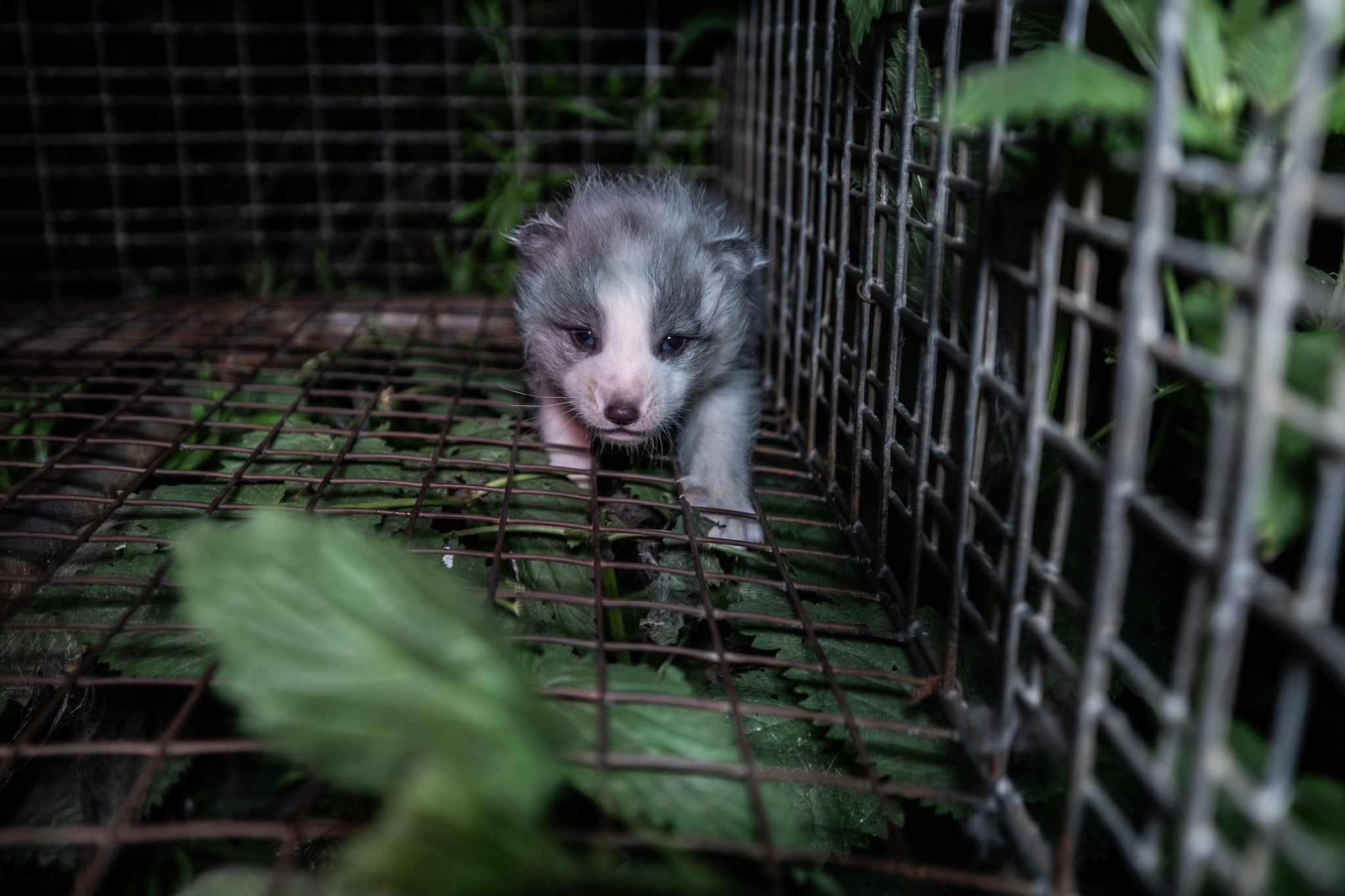
Fortunately, the fur industry has suffered a major blow. In fact, 2025 will be remembered in history as a global milestone in ending this cruel practice.
After over a decade of work, on December 2nd, Polish President Karol Nawrocki signed the anti-fur farming bill we helped draft. When announcing his decision, Nawrocki stated:
The facts are unequivocal: over two-thirds of Poles, including rural residents, support a ban on fur farming. This voice cannot be ignored. This is the direction that society indicates by a decisive majority.
In the final push, we:
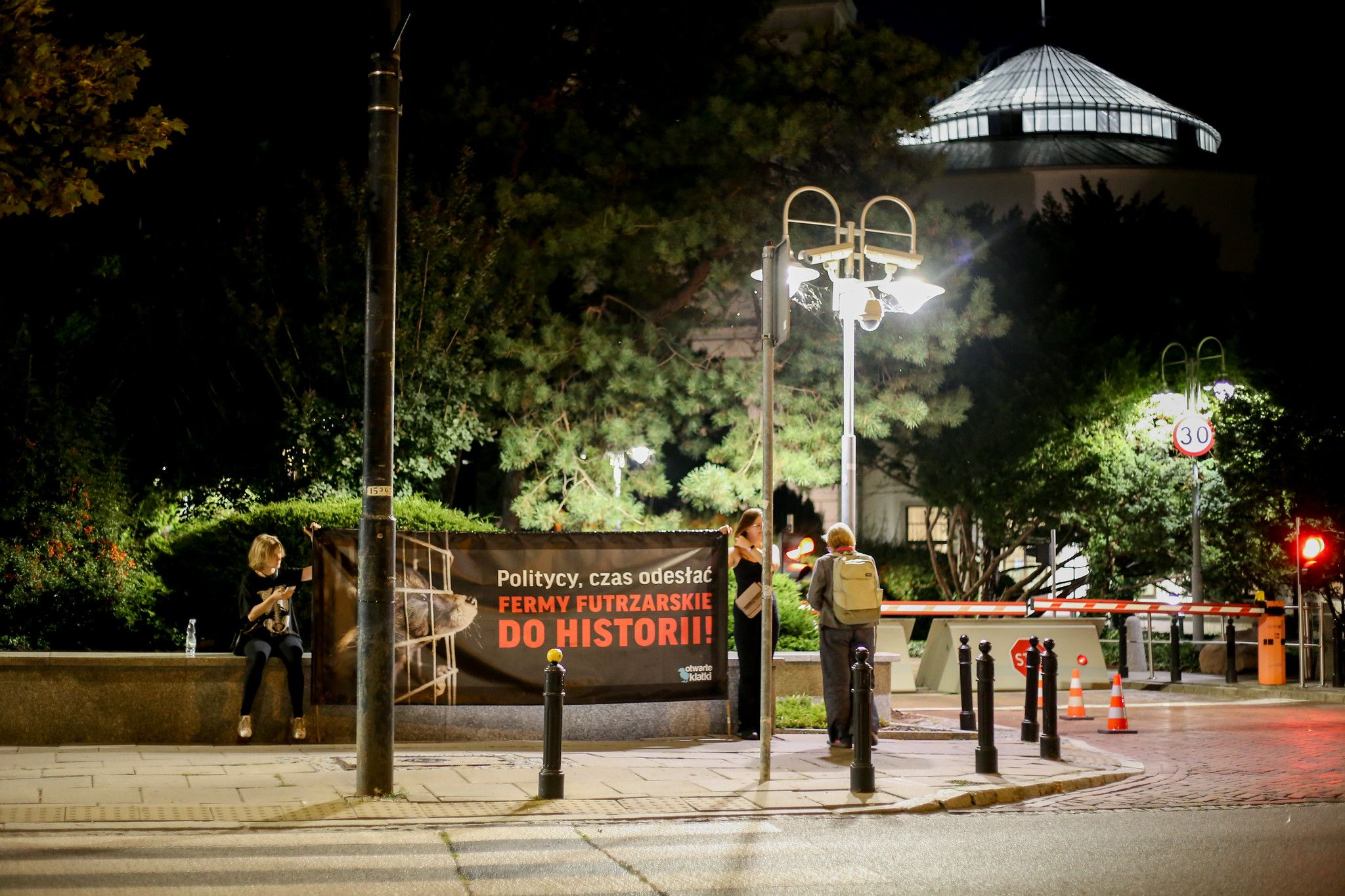
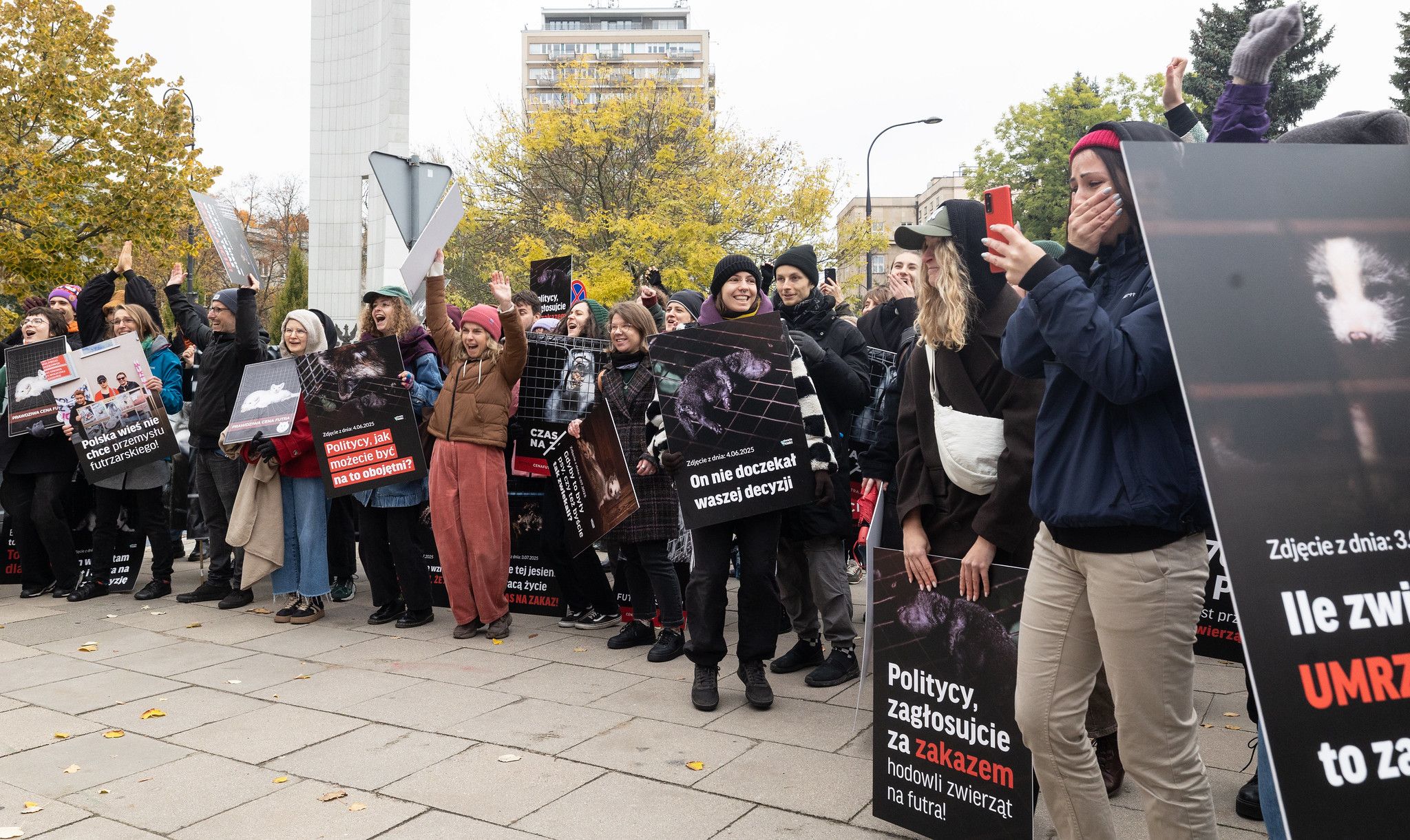
While work on the ban has been ongoing for a long period of time, the last two years saw a concentrated push from us, as we seized a window of opportunity to finally secure the legislation. It was an incredibly intense period for the organization, especially our fur farming program team, who worked as hard as humanly possible, losing sleep thinking through what could go wrong, and obsessing about every detail. But we maintained other critical work, like phasing out cage eggs from Polish markets, without losing momentum there.
A ban means these animals will never be born into those cages. It’s not a welfare improvement—it’s the end of an industry built on cruelty.
In the same year, we celebrated the decision of the Supreme Court in Bulgaria that upheld the ban on mink farming in the country and saw the last fur farm in Bulgaria close.
Cage-egg farming, while in a stable decline in many countries, remains one of the most pressing problems of our times. There are not many ways to help animals that are as effective:
The cage-free program continued to be the most important one in Anima International in 2025. Our work continued to deliver results across Europe. We were thrilled to learn that our past work in Poland was assessed as highly cost-effective—each dollar spent positively affected 1947 days of animal experience as captured by so-called Suffering Adjusted Days (SADs; explained here). It also compared favorably to other charities, which is a nice encouragement.
As of now, approximately 63% of hens in Poland remain in cages, a major progress from 87% before we started. It’s a major success story, but there is still a way to go and ensure this momentum continues.
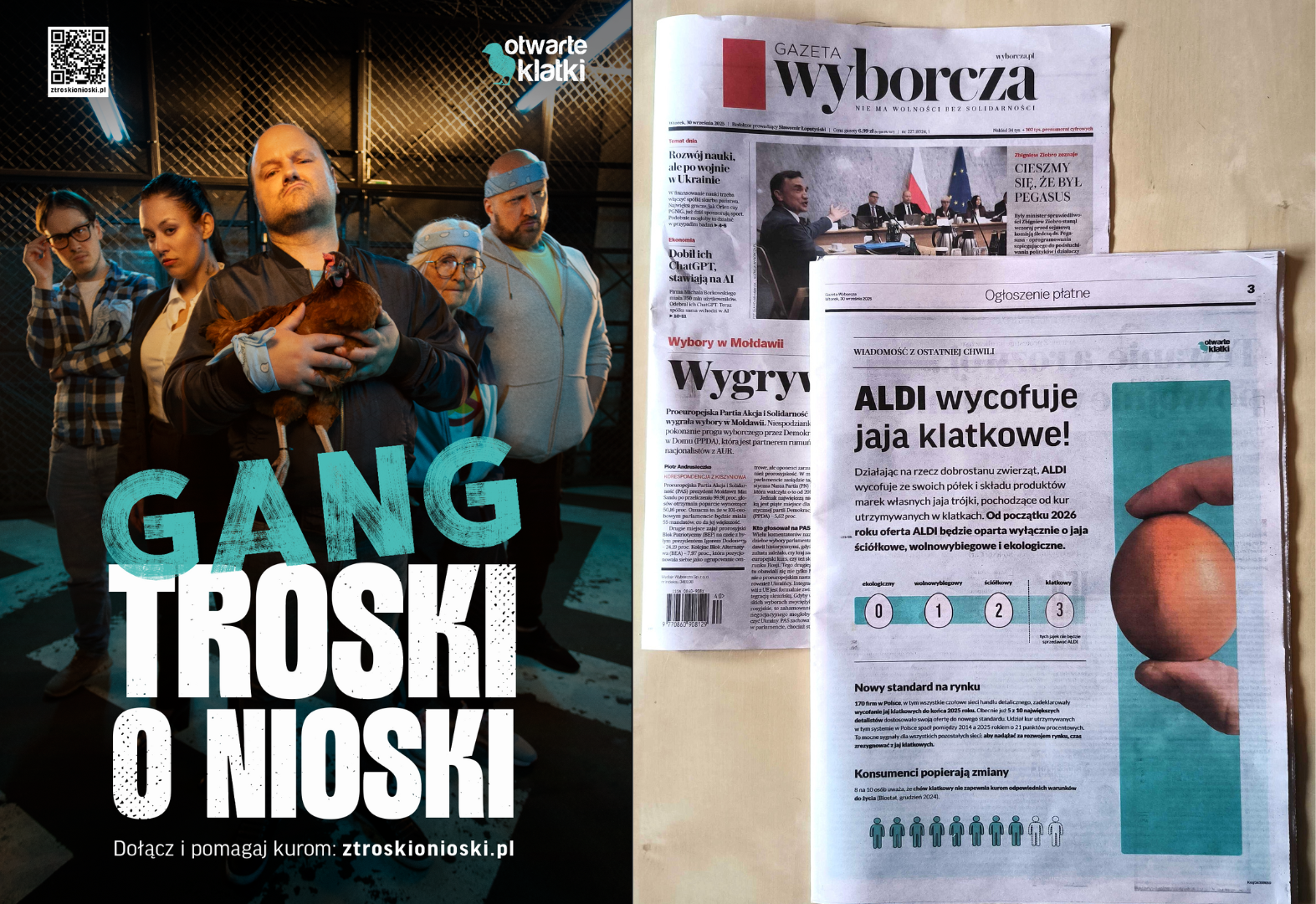
This progress didn’t happen by accident. We maintained relentless pressure on companies to fulfill their cage-free commitments, tracked their implementation through our 7th annual report covering 170+ companies, and worked with media and public figures to keep them accountable. Major retailers like Aldi Poland made real progress this year. Many had 2025 deadlines, so the stakes were high.
Still, we have substantial work ahead—particularly with Polish exports, which represent a major fraction of the country’s production. The coming years will be critical for tackling these issues.
At the end of 2024, our work in France moved to a new program—cage-free work. It was initiated after we closed our previous program, working with public catering to introduce meat-free dishes. This year, we announced this change and explained our reasoning.
After changing their direction, our team got to work. The first focus: mass catering companies and wholesalers, which make up a sizable chunk of the French market that still needs to move toward cage-free. The impact was immediate: the French Wholesaler Association publicly stated their intention to phase out cage eggs entirely as an industry. The CEO of a significant player in the French wholesale industry personally engaged with our campaign.
Perhaps most significantly, we worked with a right-wing French MP to submit a resolution at the French National Assembly, asking the EU Commission to include the end of cages for laying hens in its 2026 Work Program.
Laws set standards for farm animals, which are far from sufficient. The reality is far grimmer—even those minimum standards are routinely ignored. This is exactly what we discovered this year in Bulgaria when we documented a cage hen farm holding 45,000 birds in fundamentally non-compliant conditions, grossly mistreated. We submitted our footage to the Bulgarian Food Safety Agency. They responded with immediate action: the farm was shut down, and all laying hen farms across the country were ordered to be inspected. It’s a striking reminder that enforcement requires witnesses.
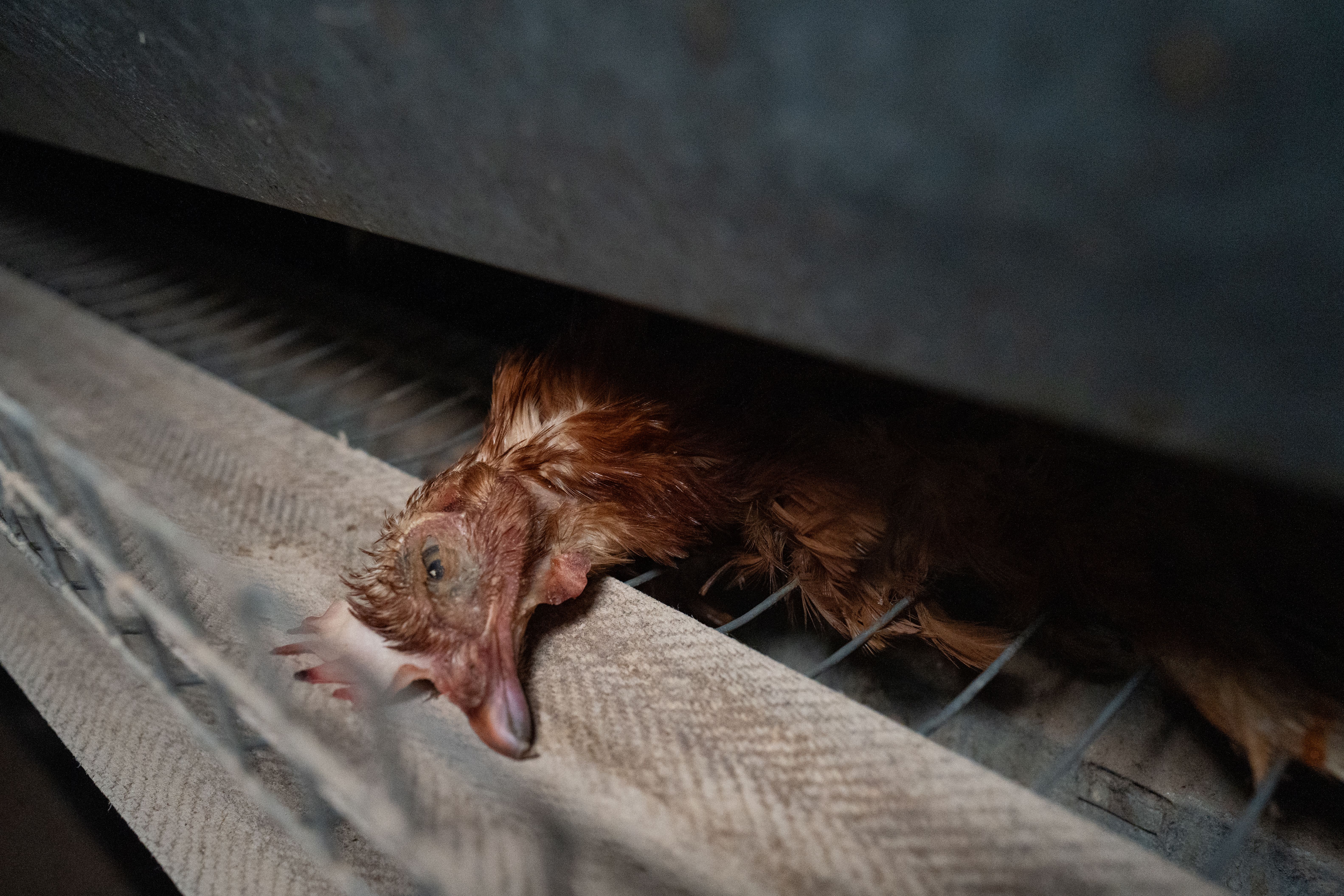
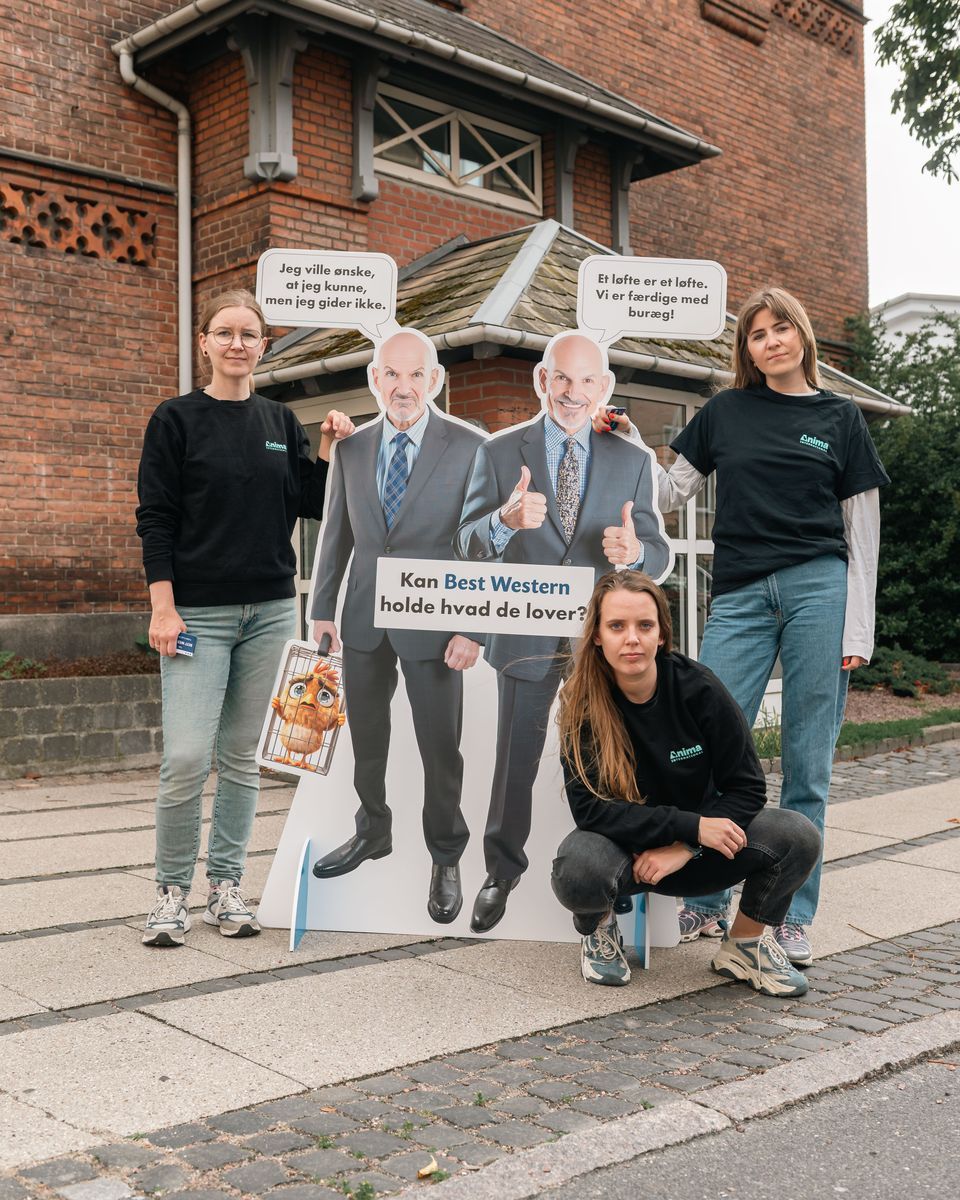
Promises from companies mean nothing if no one enforces them. In 2025, we pushed companies with a major international presence to follow through on their promises for animals.
We joined negotiations with hotel giant Marriott and ran the European leg of a global campaign targeting Best Western—organizing over 100 protests and actions at their hotels across the continent and showing up at their European headquarters. The pressure worked. Best Western is now 70% cage-free and has committed to reaching 100% by early 2026.
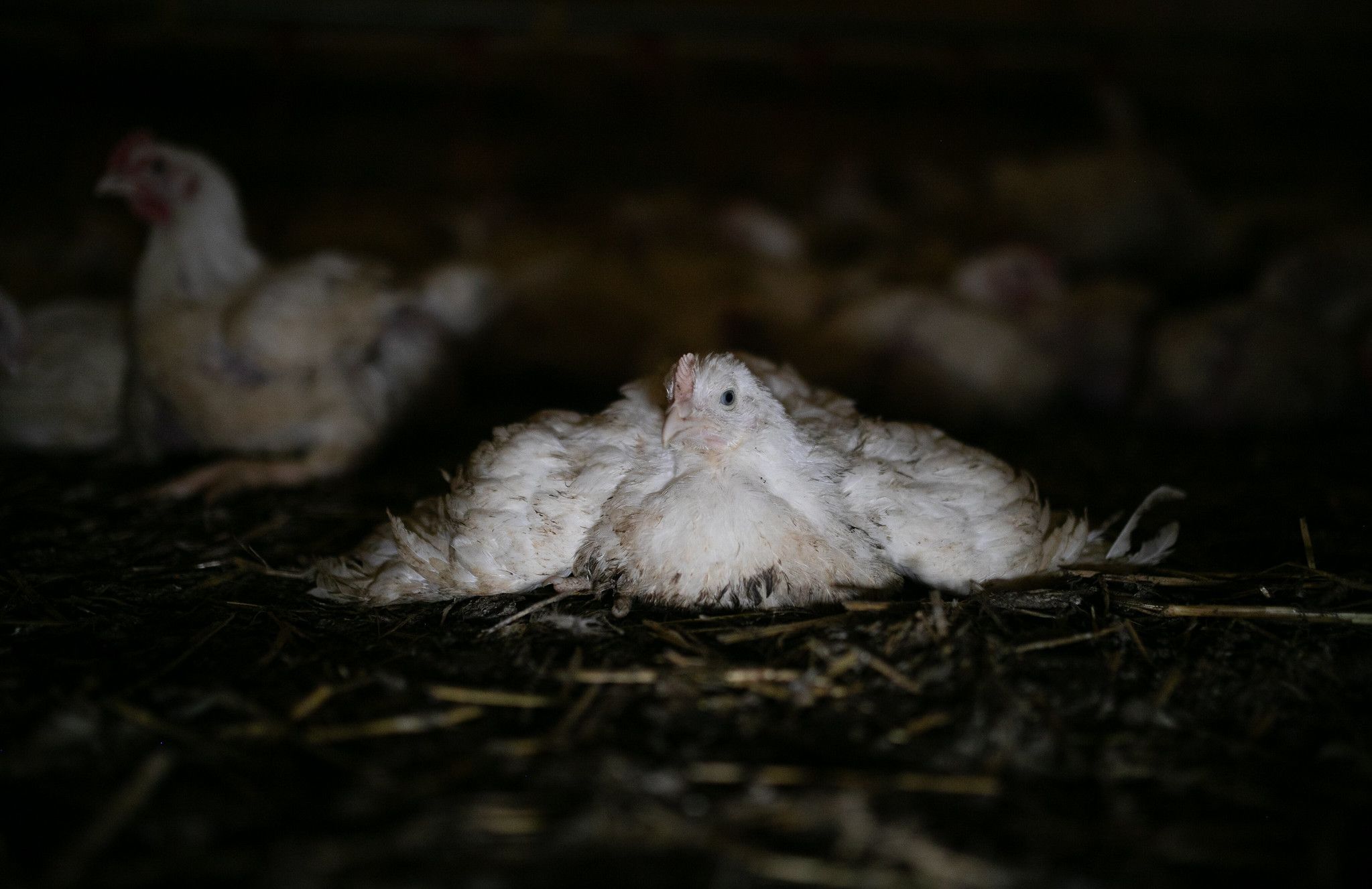
Broiler chickens are among the most numerous and most mistreated animals on the planet. Bred to grow so fast that their legs often can’t support their own weight, they spend their short lives in chronic pain. The European Chicken Commitment exists to change this—setting standards for slower-growing breeds, better living conditions, and more humane slaughter. Our job is to make sure companies are held accountable for the suffering that exists in their supply chains. But to improve the lives of these animals, we need to convince companies to adopt better practices, and even if they agree, declarations mean nothing without a follow-through.
After nearly two years of campaigning and negotiation, the supermarket group Coop—holding roughly 30% of Norway’s market—committed to phasing out most fast-growing chickens by early 2027. This means millions of birds will live better lives.
It didn’t happen by accident. It happened because our team refused to give up, backed up by strong public support. And Norway is making progress: 23% of the market is already meeting the European Chicken Commitment standards.
All Norwegian supermarkets and producers have promised to phase out fast-growing breeds, and Anima has now taken on its most ambitious goal to date—to secure a European Chicken Commitment from McDonald’s in Norway.
In Denmark, Silkeborg became the 27th municipality to vote for phasing out fast-growing chickens from public purchases—a particularly meaningful win as the country’s 8th largest municipality. As of now, 26 out of 98 municipalities have introduced breed or stocking density policies. Local governments are leading where national policy has lagged.
But our main focus has been the retailers. The campaign is not easy. While major companies, like Lidl and Rema 1000, are progressing swiftly in their promises to remove the breeds of animals that cause immense pain, many others are moving more slowly than we had hoped for them to. There’s still a long way to go, but we’re seeing progress.
We continued our campaign against Coop Denmark. We maintained the relentless pressure over the recent period—together with our fierce supporters, we showed up at the company’s events, we engaged directly with company leadership, we livestreamed from chicken farms to their headquarters, and did live performances outside their headquarters. The issue is now impossible for their leadership to ignore.
The campaign led Coop to make real strides during 2025—they now assess that the majority of their fresh chicken section will be slower-growing breeds by year’s end—likely around half their total volume. By next summer, they’re aiming for 70% slower-growing. We need to see it happen before we celebrate, but we’re cautiously optimistic.
The broader numbers tell a story of real change. Data from the agricultural lobby group shows 28% of all broilers produced in Denmark are now slower-growing breeds. Since exports are almost entirely fast-growing, that means somewhere between 39–47% of chickens raised for the domestic market are slower-growing. A few years ago, that number was negligible.
Our team participated in discussions at the European Parliament in Brussels, joining NGOs, MEPs, and industry representatives to push for stronger broiler welfare standards across the EU. The conversations in Brussels shape what’s possible—and we intend to be in the room.
Since the inception of Anima International, we have dedicated ourselves to making sure that we are not over-focused on the countries in which we are present. To help animals effectively, the whole global movement needs to grow, connect, and get more knowledgeable. To that end, we’ve committed to building infrastructure that connects advocates globally, shares knowledge, and supports promising groups wherever they emerge. In 2025, that meant hosting major conferences, publishing resources, and backing interventions worldwide.
Our investigation team completed a major operation in Serbia, obtaining the first footage from cage-egg production in the country. This evidence was instrumental for launching the Serbian campaign “Supermarkets without cages”—already engaging +10,000 Serbs in the campaign.
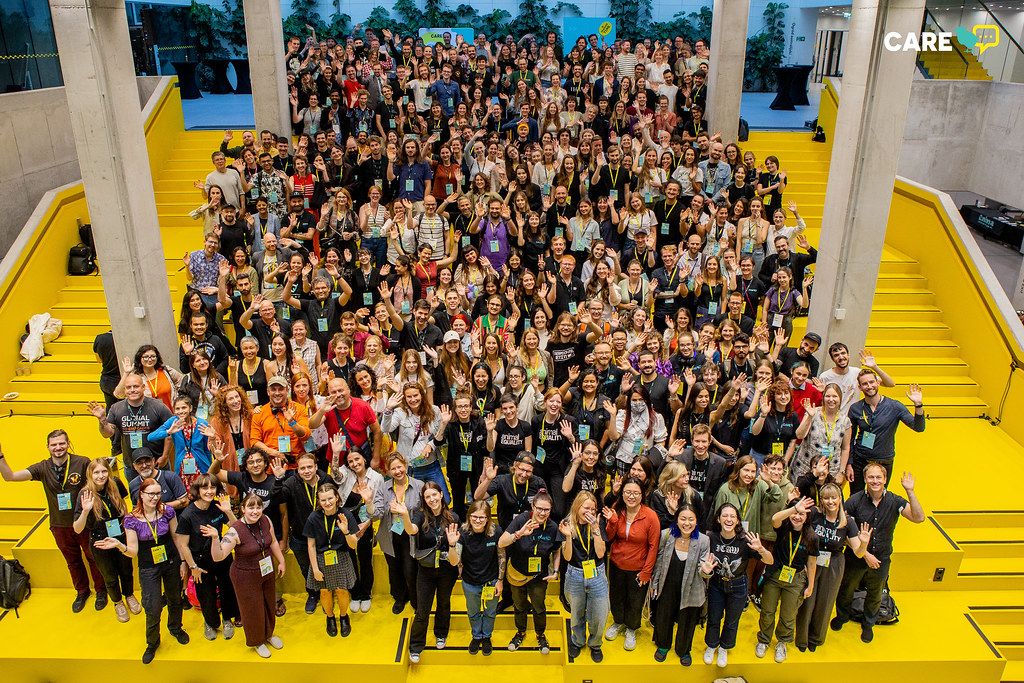
CARE 2025 marked the 10th edition of the Conference on Animal Rights in Europe. For almost a decade now, this event has brought advocates from around the world together to share strategies, build relationships, and recommit to the work ahead. This year was no different, and it was a major success with more than 550 participants representing over 170 organisations and groups from 50 countries.
In Norway, where our broiler chicken campaigns have achieved real success, we hosted a national conference to strengthen the local movement. Wins mean nothing if there’s no one to build on them. We’re making sure there is.
In 2025, Kazakhstan hosted the first animal welfare conference of this scale in Central Asia. One hundred thirty people gathered from Kazakhstan, Kyrgyzstan, Uzbekistan, Tajikistan, and beyond. For many, it was the first time they’d been in a room with so many others who shared their commitment to animals.
We published a summary of our efforts to build animal advocacy movements in Central Asia and the Caucasus on our blog.
Winning policies for animals is one lever. Shifting the market itself is another. In 2025, we continued to increase innovation and reduce regulation that harms animal-friendly business endeavors.
For years, plant-based meat producers in Poland were statistically invisible. Outdated government classifications lumped them into a generic “other food products” category—meaning no one could track the sector’s growth or make a case for supporting it.
In 2025, alongside the Polish Plant-Based Food Producers Association (which we co-founded), we changed that. Plant-based is now an official category of its own.
This might sound like a bureaucratic detail, but it matters: you can’t support an industry that doesn’t officially exist. This development gives the sector a foundation for better data, better policy, and better investment.
We didn’t stop at categorization. We joined forces with ProVeg in Poland and sat down with three major Polish retailers to discuss a very concrete matter: monitoring the protein ratios in their product assortments using ProVeg’s Protein Tracker tool. Two retailers responded with genuine enthusiasm. We’re now scheduling individual meetings with the biggest retail companies in Poland.
The goal is simple but ambitious: make plant-based options more visible, more available, and harder to ignore.
We also released our comprehensive report, The Plant-Based Food Industry in Poland 2024 – data, opportunities, and challenges, giving stakeholders working to shift Poland’s food system the market intelligence they need to act strategically.
Finally, we hosted the eighth edition of our annual Plant-Powered Perspectives conference. The conference has become an event the food industry pays attention to – a space where conversations about the future of plant-based foods meet the latest in food technology and innovation.
Whether we like it or not, the world may change dramatically—perhaps unrecognizably—with the emergence of artificial superintelligence. What does that mean for animals? It’s a question most of the animal advocacy movement hasn’t seriously grappled with, so we tried to understand what’s coming.
We asked two researchers with deep expertise in AI safety—Lizka Vaintrob from Forethought and Ben West from METR—to write a short overview on the potential impact of transformative AI on animal welfare.
Their analysis is worth reading in full, but the core insight is this: if superintelligent AI arrives in the next decade or so, it will reshape everything – economies, governance, food systems, and the very structure of how decisions are made. Some of the work we’re doing now will matter enormously in that future. Some of it may become irrelevant overnight. While their report is not Anima International’s stance, it’s well-reasoned and thought-provoking. It seems clear that, as animal advocates, we need to be engaging with this subject seriously.
On July 10, 2025, the European Commission published the General-Purpose AI Code of Practice – a set of measures AI laboratories can implement to demonstrate compliance with the EU AI Act.
Buried in the Safety and Security chapter is a provision addressing risks to non-human welfare. We believe Anima International played an instrumental role in securing its inclusion.
This matters. It’s one of the first times animal welfare has been explicitly recognized in major AI governance frameworks. But we should be clear-eyed about the limitations: the Code is voluntary. It doesn’t impose new obligations beyond what’s already in the AI Act. And it’s still under review by EU Member States before formal endorsement.
Whether this provision actually influences how AI laboratories operate remains genuinely uncertain. The voluntary nature of the Code, combined with the pending approval process, means we’re far from guaranteed impact. But getting animal welfare into these conversations at all – while the frameworks are still being built – is a foundation we can build on.
The race to shape how AI develops is already underway. We intend to make sure animals aren’t left out of it.
In Denmark, even the most horrific cases of animal abuse could only result in a maximum of two years imprisonment. It was clearly at odds with high public support for better animal protection. To address this gap, we launched a campaign with two demands:
That second point mattered enormously to really change how society can effectively stop animal abuse. It places animal cruelty alongside other serious crimes in Denmark’s most fundamental criminal legislation.
We delivered more than 40,000 signatures to the Minister for Agriculture and the Minister of Justice. But changing legislation requires more than public support. We built something unusual: a coalition of five opposition parties spanning the entire political spectrum, all speaking with one voice during negotiations.
The win came sooner than we anticipated – we were actually preparing to escalate pressure on the Minister of Justice when the announcement of success dropped. The government will insert a new provision in the Penal Code, increasing the maximum penalty to six years imprisonment. Exactly what we fought for. This swift campaign signals that Denmark is finally ready to treat animal cruelty as the serious crime it is, slowly aligning public sentiment with how the country operates.
We owe it to animals to spend every dollar wisely. They can’t hold us accountable – but we can do it ourselves. To assess whether we are spending every dollar responsibly, we commissioned an independent evaluation of our programs in Poland. If we’re serious about reducing suffering, we need to be honest about what works and what doesn’t.
We hired two researchers with strong reputations for thoroughness and objectivity – Nuño Sempere and Saulius Šimčikas – who are not afraid to throw punches at the work of others.
The analysis covered results and costs from the very beginning of our work in Poland, took about a year, and evaluated five of our programs: cage-free commitments, broiler commitments, Stop the Farms, fur farming, and retailer plant-based commitments.
The results were encouraging. For each dollar spent on our work in Poland, we affected roughly 32 years 1947 suffering-adjusted days (SADs) of farmed animal life. Our cage-free work proved especially cost-effective, with 540 SADs 62 years of animal life affected per dollar. Even Stop the Farms, a program we have had internal debates about for years, turned out to deliver real impact by delaying suffering for large numbers of animals.
This analysis has limits. It captures direct effects but misses long-term shifts – changes in public attitudes, policy momentum, the things that are the hardest to measure but may matter the most. We went in hoping for definitive answers and came out humbled by how much depends on initial assumptions. Still, it sharpens our thinking. It gives us one more piece of the puzzle when deciding where to focus. And it confirms something we suspected: our work in Poland has been genuinely cost-effective.
We plan to do more evaluations like this in the future – not immediately, but when we have enough time and capacity. And I will make a promise here that no matter the results, we will make them public. It’s something we owe to the animals we’re trying to help.
We submitted a petition with 110,000 signatures calling for a ban on calf cages to the Parliament, supported by MPs, influencers, and industry representatives. Following this, we were invited to a productive and promising meeting with the Deputy Minister of Agriculture—a significant step toward securing the first legal protections for farmed animals in Bulgaria.
The European Union holds enormous power—not just over its member states, but over global markets and supply chains spanning every corner of the world. When the EU makes changes on animal welfare, the ripples extend far beyond European borders. Producers worldwide adjust their practices to access European consumers, making Brussels a uniquely powerful lever for change.
Changing this leviathan for the sake of animals is not easy and, at best, slow. As I recently wrote, the European Union has a shameful track record of ignoring its citizens, which undermines its democratic core and erodes public trust in the EU. We want to change it. This year, we committed significant resources to being present where these decisions are made. Our team spent countless hours in Brussels, meeting with policymakers and making a case for animals in the corridors where Europe’s future is shaped.
When the European Commission opened public consultations on animal welfare, we mobilized citizens across multiple countries, guiding them to participate and make their voices heard. The response was extraordinary – the Commission received over 236 thousand submissions, more than any other public consultation concerning farmed animals.
Our internal data shows that we were responsible for at least 50 thousand of these, especially the supporters in countries with a continuous presence, like Poland or Denmark, reacted strongly to our messages about consultation.
The Commission now has yet another reason to deliver on its promises. We will continue to hold them accountable, ensuring that the momentum we’ve built translates into meaningful legislation. The fight for animals in Europe is far from over, but 2025 showed that when we come together, our collective voice cannot be ignored.
2025 was a busy year. It ends today. Tomorrow, human civilization enters the second quarter of the 21st century. When I was growing up, this century was painted as one of awe and wonder. In some sense, it is—we’re building intelligent systems that would have been pure science fiction just decades ago. Yet we’re treating sentient beings on this planet with dystopian cruelty: locked in windowless halls, their bodies violently drained of life just to harvest their flesh and organs
The world doesn’t have to look like a horror movie. I refuse to accept it. So do millions of others, and that number is only increasing.
Fourteen years ago, I stood on a street corner holding a banner. Back then, I didn’t know that I will live to see the president signing the ban we’d fought for. I don't know what the next fourteen years will bring. But I know this: every cage we’ve emptied, every law we’ve changed, every farm we’ve closed—it happened because people like you refused to look away.
Thank you for being one of those people. Every donation, every shared post, every signature—it matters. Don’t let anyone tell you otherwise.
Help animals. Donate to free them from their misery — https://animainternational.org/donate/
...
Acknowledgements:
Jan Sorgenfrei, Ania Kozłowska, Anna Bearne
Jakub Stencel has been involved in the animal advocacy movement for over 10 years. Currently holds the position of Director of Development in Polish animal protection organization – Otwarte Klatki, and Executive Director in Anima International, which he co-founded. On a day-to-day basis, Jakub is responsible for strategic planning, data-driven development, and organizational growth.

